Parents urged to spot online stalking signs in young people
Parents are being urged to recognise online stalking warning signs in young people. Police and charities say anyone concerned can seek help, with safety advice tailored to the circumstances.
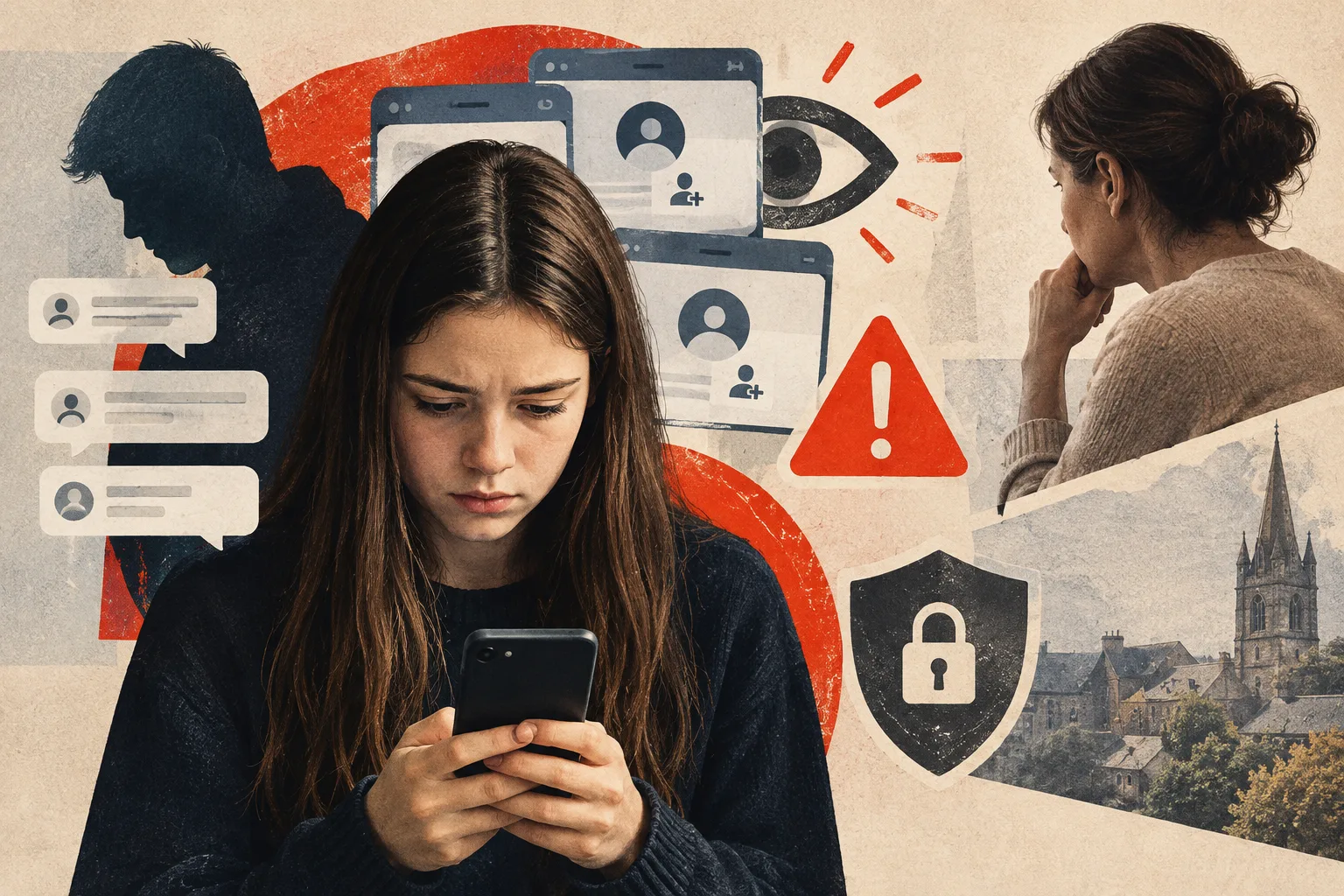
Repeated unwanted messages, new accounts created after a block and close monitoring of a young person’s online activity can all be warning signs, experts told the BBC. Stalking typically involves a pattern of unwanted, fixated behaviour, rather than a single message.
The warning follows a case in which a Wiltshire teenager used fake social media accounts to contact a girl after she blocked him. He later attacked her with a knife in a Cirencester shop on 15 March.
The girl’s mother told the BBC: “She had no idea that he was logging when she was online, who she was speaking to, what she was saying.”
He pleaded guilty to wounding with intent and possessing a bladed article in a public place. On 21 September, he received a 12-month referral order and a three-year restraining order, Gloucestershire Constabulary said.
The BBC also cited a rise in recorded stalking offences, but its figures did not distinguish online cases or young victims.
What about blocking?
The Metropolitan Police tells officers Independently verifiedwww.met.police.uk: its guidance says a suspect may look for other ways to reach them, including in person or covertly online. Victims may nevertheless choose to block someone as part of their own safety plan, the guidance says.
Other advice differs: the charity FearFree includes Independently verifiedStalking and harassment - FearFree in its online safety advice. A focus group of five stalking-support providers run by the police watchdog also raised concerns about possible escalation after blocking, but did not measure how often it happens.
West Yorkshire Police recommends discussing options with the police and a specialist support service. Making accounts private, restricting location sharing and protecting accounts with strong passwords are among the precautions highlighted in the BBC report.
Police.uk advises keeping contact to a minimum and, where it is safe, saving messages and recording the dates and times of incidents. It says people Independently verifiedWhat to do now if you're being stalked or harassed | Police.uk.
For the main stalking and harassment offences in England and Wales, the Crown Prosecution Service says a course of conduct must involve Independently verifiedStalking or Harassment | The Crown Prosecution Service. That does not mean someone must wait for a second incident before seeking police help.
In an emergency, call 999. For non-emergency advice or to make a report, call police on 101. The National Stalking Helpline, run by the Suzy Lamplugh Trust, is on Independently verifiedContact | Suzy Lamplugh Trust.
Sign in to give this article a thumbs up or down.
From the discussion
Private test discussion. Comments are readers’ views and are not yet automatically fact-checked. Editing is available for 60 seconds after posting.
Sign in with a confirmed reader account and choose a username to read comments and participate.
Sorting applies to top-level comments; replies remain oldest first. New comments and likes can change the order. Refresh for the current ranking.
Loading comments…